The pharmaceutical industry demands a strict hygiene protocol to maintain the safety and quality of…
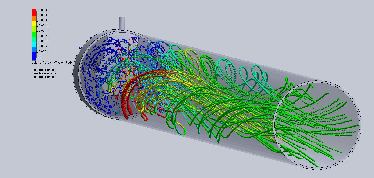
Computational Fluid Dynamics (CFD) has become an essential tool in modern process and mechanical engineering, particularly in the design and optimisation of static mixers. By allowing engineers to analyse fluid behaviour in detail before equipment is built or installed, CFD reduces uncertainty, improves performance, and lowers both capital and operating risk. However, whilst CFD has advanced significantly in recent years, it cannot fully replace the value of physical lab testing and wet testing, which remain a critical element in validating and proving static mixer design. In this article, we look at the growing field of computational fluid dynamics and explain the various benefits it offers for static mixer design.

But First, What Is Computational Fluid Dynamics (CFD)?
Computational Fluid Dynamics (CFD) is a branch of engineering analysis that uses numerical methods and algorithms to simulate how various fluids flow, mix, and interact with solid surfaces. In practical terms, CFD replaces large portions of lab-based physical testing with computer-based simulations that solve the fundamental equations governing fluid motion, heat transfer, and mass transport.
In computational fluid dynamics engineering, a virtual or digital model of the static mixer and pipework is created and divided into a fine computational mesh. The software then calculates velocity, pressure, turbulence, and concentration fields throughout the system based on the actual fluid properties, flow rates, and operating conditions. This allows design engineers to visualise how fluids behave inside a static mixer; information that would otherwise be costly to measure experimentally.
For mixer design, CFD modelling provides insight into how fluids split, recombine, and homogenise as they pass through internal mixing elements. It enables performance to be evaluated under real-world conditions long before fabrication or installation, making it a powerful design and validation tool.
Benefits Of CFD Modelling For Static Mixer Design:
1. Simplifies The Prototyping Stage
CFD simulations allow multiple static mixer geometries, element arrangements, and operating conditions to be tested virtually before any equipment is manufactured. This significantly reduces the need for physical prototypes, lowering your development costs and shortening project timelines. Design iterations that once required lengthy fabrication and testing can now be completed digitally in a fraction of the time.
2. Optimises Energy Efficiency
CFD accurately predicts pressure drop across a static mixer, enabling engineers to compare designs and identify configurations that deliver the required mixing performance with the lowest energy penalty. By balancing mixing efficiency against pressure loss, CFD helps minimise pumping energy and directly reduces long-term operating costs.
3. Consistent Mixing Quality
By visualising velocity fields, turbulence intensity, and concentration distribution, CFD modelling reveals how effectively fluids are mixed throughout the mixer length. Using this information, engineers can identify and eliminate ‘dead zones’, short-circuiting, or poorly mixed regions, ensuring uniform composition and consistent product quality in the final process stream.
4. Predicting Performance Before Installation
One of the key advantages of CFD is the ability to model how specific fluids behave under actual operating conditions, including flow rate, viscosity, density, and temperature. This provides confidence that the static mixer will perform as expected once installed, reducing commissioning risk and avoiding costly post-installation modifications.
5. Enabling Reliable Scale-Up
Scaling a mixer design from pilot or laboratory scale to full production size introduces significant uncertainty if based on empirical rules alone. CFD verifies that flow behaviour and mixing performance remain consistent as pipe diameters, flow rates, and throughput increase. This reduces your technical risk during plant expansion and supports confident decision-making for large-scale installations.
Next Steps
CFD-driven design is central to delivering high-performance static mixing solutions. By combining advanced CFD modelling with proven mixer geometries, Statiflo helps engineers optimise mixing efficiency, control pressure drops, and validate performance before any equipment reaches site. Contact us to learn how CFD-led mixer design can reduce risk and improve outcomes for your process.


Related Posts