The UK water sector is entering a period of unusually high capital investment, driven by…
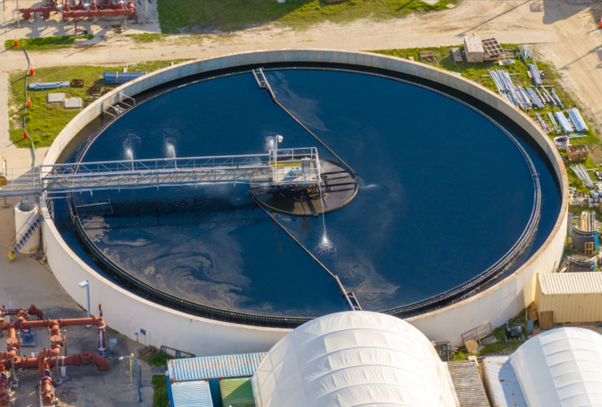
Flocculation is a core unit process in flocculation water treatment, enabling the efficient removal of turbidity, suspended solids, and dissolved contaminants from raw water supplies. It is widely applied in public drinking water plants, industrial water treatment systems, and pre-treatment stages for membrane filtration.
From an engineering perspective, flocculation is not a standalone operation; it is a controlled physicochemical process that links coagulation chemistry, hydraulic mixing, and downstream solid–liquid separation. When correctly designed and optimised, flocculation can significantly improve water clarity, protects filtration assets, and ensures regulatory compliance for potable water quality. Read on to find out more.

How Flocculation Removes Turbidity And Contaminants
Raw water, referring to water in its natural and untreated state before any purification or conditioning, typically contains a range of fine suspended particles such as clays, silts, organic matter, algae, and microorganisms. These particles often carry a negative surface charge, causing them to remain dispersed and resistant to gravity settling. Flocculation works by aggregating these fine particles into larger, heavier clusters known as flocs. These flocs encapsulate:
- Turbidity-causing solids
- Pathogenic microorganisms attached to particles
- Organic compounds responsible for taste, odour, and colour
By converting stable colloids into settleable or filterable solids, flocculation enables effective downstream removal and ensures treated water meets drinking water safety standards.
The Two-Stage Coagulation – Flocculation Process
Flocculation in water purification is preceded by coagulation, and together, they form a tightly coupled two-stage process:
- Coagulation: Coagulation involves the rapid dispersion of chemicals (commonly aluminium or iron salts) into the water stream. These coagulants neutralise the electrostatic charges on suspended particles, destabilising them and allowing inter-particle contact.
- Flocculation: Following charge neutralisation, the water undergoes controlled, low-energy mixing for typically 15–30 minutes. This gentle hydraulic regime promotes particle collisions without excessive shear, enabling microflocs to grow into larger, stronger flocs suitable for removal. Process control at this stage is critical; over-mixing can shear fragile flocs, while insufficient mixing can limit floc growth and reduce removal efficiency.
What Chemical Flocculants Are Used In Drinking Water Treatment?
A range of chemical flocculants can be used depending on the raw water quality, as well as your temperature and treatment objectives. Common options include:
- Aluminium-based flocculants – such as aluminium sulphate and polyaluminium chloride (PAC)
- Iron-based flocculants – including ferric chloride and ferric sulphate.
PAC is widely used in drinking water treatment due to its rapid floc formation, lower sludge volumes, and effectiveness across a broad pH range. These flocculants efficiently aggregate colloidal particles, algae and natural organic matter, and any fine solids that could otherwise cause membrane fouling. This has the positive benefit of extending asset life and lowering your operational costs.
Floc Removal Through Sedimentation And Filtration
Once flocs are formed, they must be physically separated from the water to achieve effective clarification. The two most common removal mechanisms used in water treatment systems are sedimentation and filtration. In sedimentation, water flows through clarification or settling tanks where gravity causes dense, well-formed flocs to settle to the bottom, creating a ‘sludge layer’ that can be removed mechanically. Sedimentation is most effective when the flocs are large, dense, and structurally stable, allowing for rapid and reliable solids separation.
Where sedimentation is not practical or where higher treated-water quality is required, the flocs are removed through filtration. This may include rapid gravity sand filters, multimedia filters, or membrane filtration systems. In filtration-based processes, flocs are captured within the filter media or on the membrane surface, resulting in low-turbidity, high-clarity water suitable for potable or industrial use.
Floc size and strength must also be optimised according to your downstream separation method. For example, sedimentation systems perform best with larger, fast-settling flocs, while direct filtration systems require smaller, more robust flocs capable of withstanding hydraulic shear without disintegrating. This places significant importance on mixing technology during flocculant dosing and flocculation. Excessive shear generated by impellers or high-energy mixers can fracture the flocs and reduce overall removal efficiency. Static mixers provide a low-shear, inline solution ideally suited to flocculant addition, using fixed internal elements to achieve rapid and uniform chemical dispersion while maintaining controlled energy dissipation. By minimising floc breakage and operating without motors or maintenance-intensive components, static mixing enables precise flocculation control while reducing energy consumption and mechanical complexity in modern water treatment system design.
Find Out More
Designed to deliver rapid, uniform flocculant dispersion with minimal shear, our Statiflo mixers help protect floc integrity, enhance solids removal, and optimise your downstream sedimentation or filtration performance. To find out more, please contact one of our specialists today by clicking here.

Image Source: Canva

Related Posts