Static mixers are generally easy to use, dependable, and deliver predictable mixing results, but engineers…
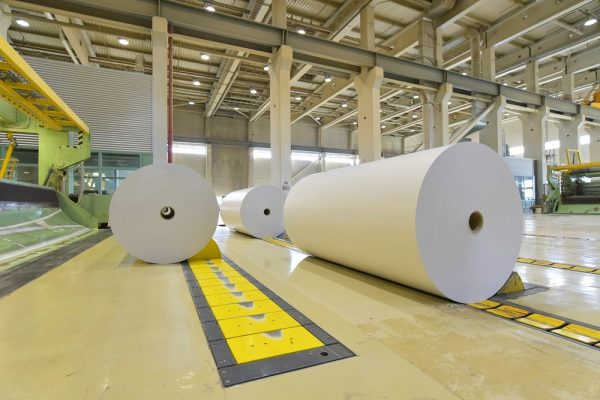
As manufacturers across the pulp, paper, polymers, and advanced materials sectors accelerate their transition toward a circular economy model, processing recycled and regrind materials reliably has become a central engineering challenge. Recycled fibre and polymer streams are often more variable, more abrasive, and more prone to clogging than virgin materials; which is why static mixers are increasingly being selected as enabling technologies to support stable processing, consistent quality, and lower environmental impact for recycled fibre and polymer applications. Let’s look at how static mixers support recycled fibre processing and how you can benefit.
1. Processing Recycled Material With Anti-Clogging Technology
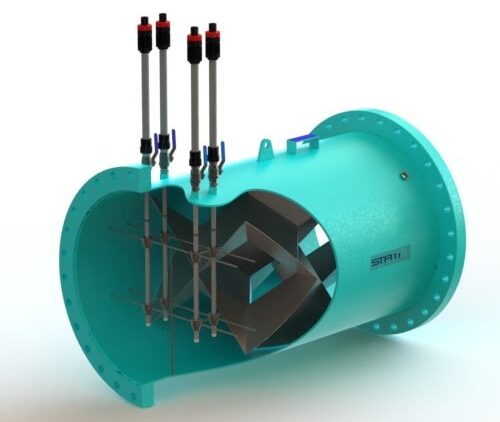
Recycled fibre and polymer streams frequently contain long fibres, fines, contaminants, or partially processed material that can accumulate in conventional mechanical mixers. Static mixers, by contrast, contain no moving parts and rely instead on carefully engineered internal elements to divide and recombine the flows. Certain static mixer designs are specifically developed to prevent fibre build-up, allowing fibrous recycled streams to pass through without blockage. This makes them very well suited to circular economy processes in pulp and paper recycling, polymer reprocessing, and emerging applications such as carbon fibre recycling processes.
2. Reducing Colourant And Additive Costs In Regrind Processing
In recycled polymer processing, achieving consistent colour and material properties can be challenging due to the variability in feedstock. Inline static mixing enables precise, uniform distribution of colourants, fillers, and performance additives into recycled polymer streams. By enabling rapid and homogeneous mixing, static mixers reduce the need for overdosing, lower your additive consumption, and minimise material waste. This helps to improve yield and cost efficiency while supporting more sustainable use of recycled materials.
3. Enabling High-Quality Recycled Fibre Blending
Maintaining mechanical strength and product quality is a key concern in recycled paper and fibre-based products. For instance, some of our static mixers are engineered to handle long fibres without entanglement or accumulation, helping you achieve uniform fibre dispersion even in challenging recycled streams. This controlled blending approach helps preserve fibre length distribution and strength properties, enabling a higher recycled content without compromising end-product performance.
4. Maintenance-Free Operation Supporting Production Uptime
Circular economy processes are often continuous and sensitive to downtime. Because static mixers contain no rotating shafts, bearings, or seals, they require no routine maintenance and introduce no additional mechanical wear points into the process. This maintenance-free operation supports high plant availability, reduces unplanned stoppages, and lowers lifecycle maintenance costs: an important consideration when processing abrasive or variable recycled materials.
5. Low Energy Consumption Enhancing Environmental Credentials
Static mixers derive all mixing energy directly from the process flow itself, requiring no external power input. Compared with mechanically driven mixers, this significantly reduces energy consumption and associated carbon emissions. In closed-loop manufacturing and recycled fibre processing, this low-energy operation aligns closely with circular economy objectives, supporting both cost reduction and improved environmental performance.
Why Robust Mixing Matters As Recycled Content Increases?
As recycled content targets increase, manufacturers are being required to design processes that are inherently tolerant of feedstock variability rather than optimised for ideal inputs. As we’ve seen, recycled fibre and polymer streams often exhibit fluctuating viscosity, inconsistent fibre length distribution, and variable contaminant loads. Static mixers help stabilise these processes by providing predictable, geometry-driven mixing that is largely insensitive to short-term changes in material properties. This stability is particularly valuable in recycled fibre systems, where uncontrolled agglomeration or uneven dispersion can propagate downstream and affect forming, dewatering, or extrusion performance.
From a system design point of view, static mixers also support modular, scalable processing architectures. Their compact, inline form allows them to be retrofitted into existing recycling lines or added incrementally as recycled content increases, without major changes to plant layout. This makes them well suited to phased circular economy upgrades, where processes must evolve over time in response to regulation, customer demand, or material availability.
Finally, the absence of rotating components simplifies end-of-life considerations for the mixer itself. With long service lives and minimal material complexity, static mixers align with circular design principles beyond their immediate process function. For engineers tasked with balancing recycled content, product quality, and environmental performance, this combination of robustness, adaptability, and longevity makes static mixing a practical enabler of circular manufacturing strategies rather than a constraint on them.
What Next?
At Statiflo, our static mixers are optimised to prevent clogging, deliver uniform mixing, and operate without maintenance or external power. For support in increasing your recycled content while maintaining product quality and process reliability, please click here to get in touch with our technical sales team.

Related Posts