



Computational Fluid Dynamics (CFD)
At Statiflo we have historically verified all our new static mixer designs using wet
testing in laboratory conditions. Wet testing in laboratory conditions can be
considered the gold standard for static mixer testing. However, there are downsides
with the associated cost and lengthy timescales.
Computational Fluid Dynamics (CFD) can be used as a more cost effective and
quicker alternative to wet testing. We are now pleased to be able to offer in-house
CFD to assist with our new static mixer designs and verification of existing models.
What is CFD?
CFD is a powerful simulation tool usd to analyse fluid flow and related physical processes using numerical methods. CFD uses mathematical models ande computer simulations to predict fluid behaviour, which is invaluable in industries where fluid dynamics play a central role.
Key CFD Applications:
- Flow Simulation: Analysing how fluids move through systems.
- Pressure Drop Prediction: Assessing the pressure changes as fluids flow through pipes, ducts, and mixers.
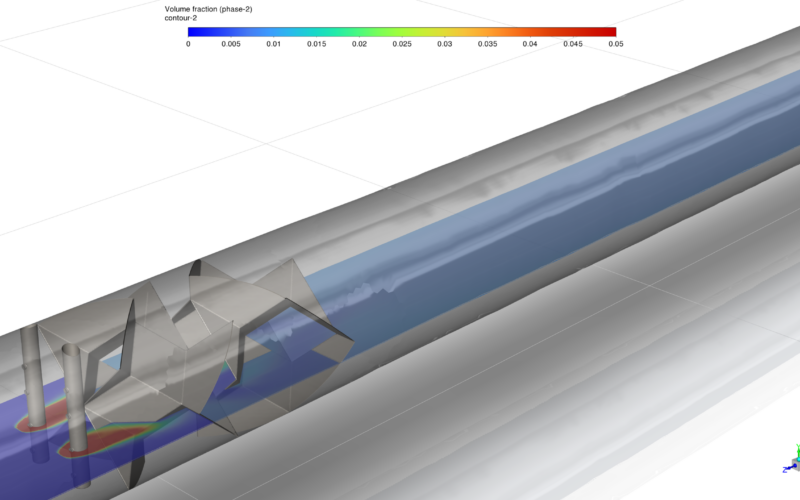
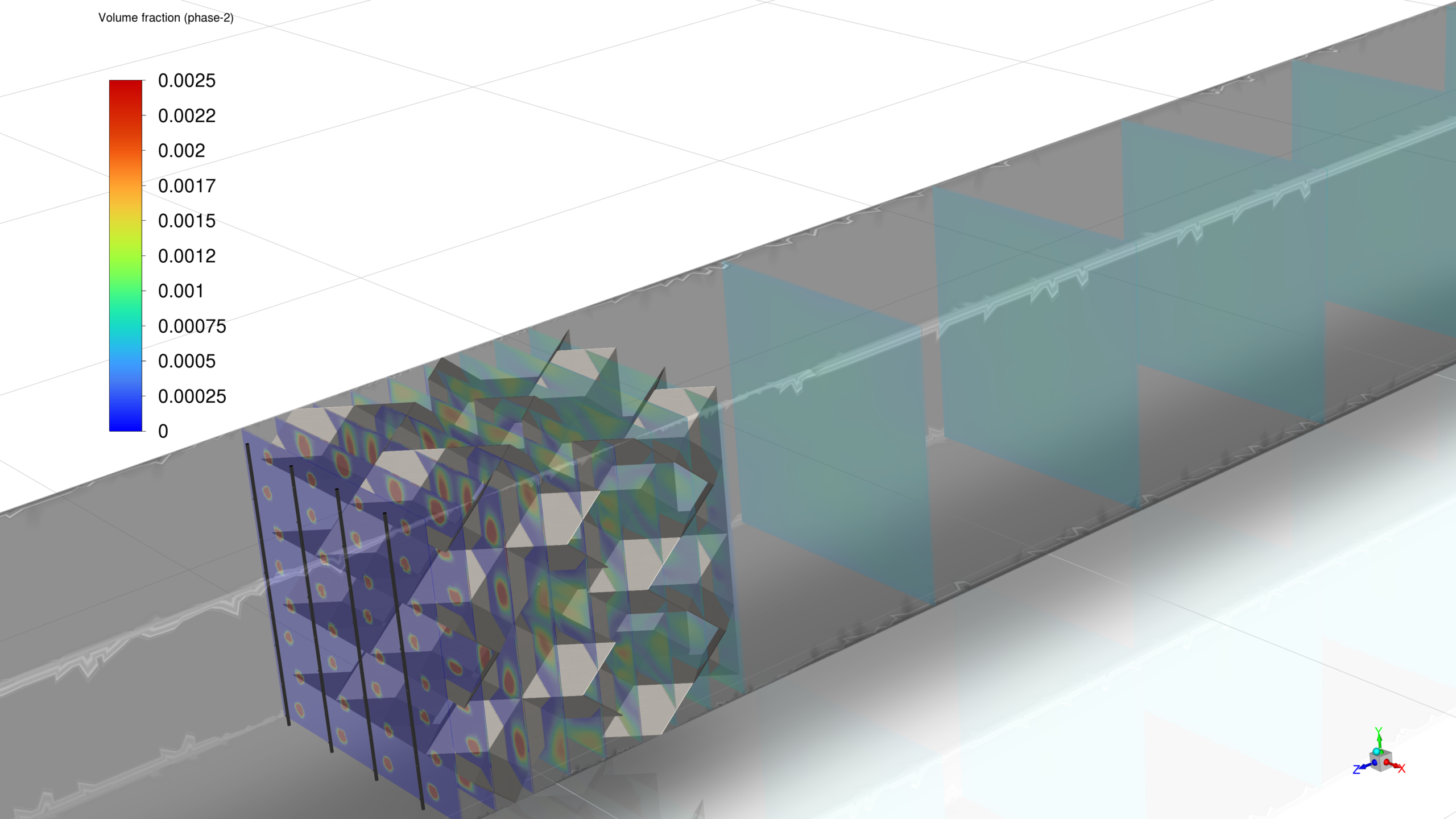
- Mixing Performance: Simulating the performance of a static mixer and confirming CoV values.
With CFD, engineers can optimise designs before physical prototypes are made, saving both time and costs.
The Role of CFD in Static Mixer Design
Static mixers can be optimised with the help of CFD to ensure maximum efficiency and performance. Here’s how CFD enhances static mixer design:
- Optimising Mixer Design
CFD allows for the simulation of various static mixer geometries. Engineers can test different configurations of mixing elements to find the most effective design for a given application. This reduces the need for physical prototypes and wet testing, speeding up the development process.
- Pressure Drop Analysis
CFD can help assess the pressure drop across a static mixer, which is crucial for ensuring that the pumping requirements are within acceptable limits. By understanding the pressure behaviour in different configurations, engineers can minimise energy consumption while maintaining optimal mixing efficiency.
- Assessing Site / Installation Location
CFD can be used to assess upstream and downstream site conditions to measure the impact on static mixer performance.
Contact Us
Have questions about how CFD can improve your static mixer design? Want to check your site conditions / layout are suitable for a static mixer? Reach out to our team of experts and start optimising your mixing processes today!

Downloads
Mixer Sizing Questionnaires

Product Brochures
Application Notes
Gas dispersion system for the ozonation of drinking water
Gas Dispersion System: The inline dispersion of a gas in a large volume of liquid…
Case Study
Process with highly viscous polymer melts
Problem A “man-made” fiber spinning plant produces thousands of individual threads simultaneously. All threads come…